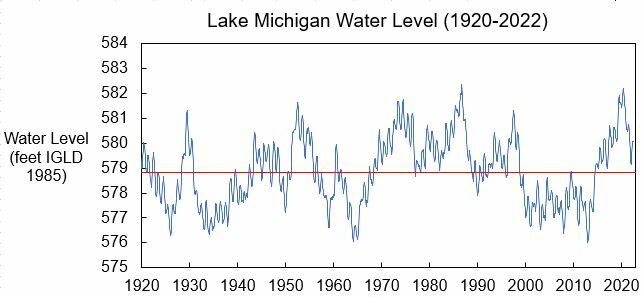
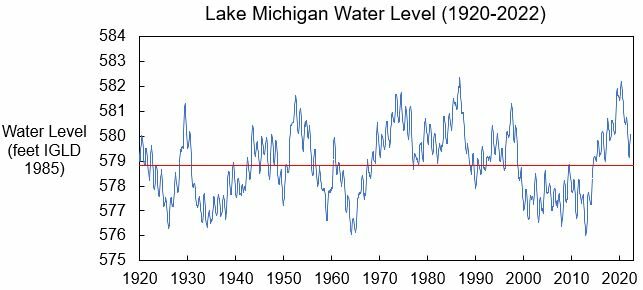
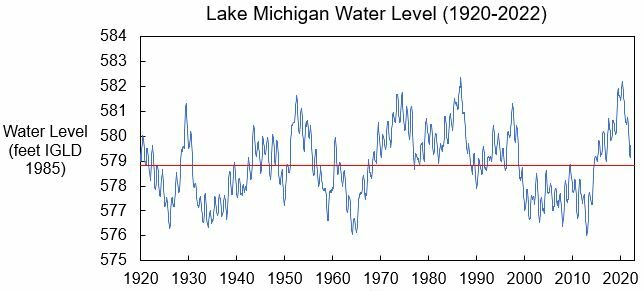
Lake Michigan water levels have now peaked for the season, with 0 inches of change from June to July. Though Lake Michigan is now about 25 inches below the highest monthly water level recorded for…
Online toolkit providing resources and guidance on integrating equity into climate resilience planning. Equitable Community Resilience Adaptation Toolkit Visit the Equitable Community Resilience Adaption Toolkit here Overview The Equitable Community Resilience Adaptation…
Meeting summary for the June 2022 CALM Network held virtually on June 22, 2022. June 2022 CALM Network Meeting Summary The Collaborative Action for Lake Michigan (CALM) Coastal Resilience network meeting was held…
Lake Michigan water levels continue their seasonal incline, increasing by 3 inches from April to May. Though Lake Michigan is now about 25 inches below the highest monthly water level recorded for May in 2020,…
Lake Michigan water levels have started their seasonal incline this spring, increasing by about 5 inches from March to April. Though Lake Michigan is now about 26 inches below the highest monthly water level recorded…
The planning guide features information, ideas and advice related to combating coastal hazards, such as coastal flooding, in Great Lakes communities. Great Lakes Coastal Resilience Planning Guide Overview of the Guide The Great…
Meeting summary for the March 2022 CALM Network held virtually on March 23, 2022. March 2022 CALM Kick-Off Meeting Summary The kick-off meeting for the Collaborative Action for Lake Michigan (CALM) Coastal Resilience…
The 2021 report features new climate data and explains the issues and impacts of a changing climate on Wisconsin residents and describes the scientific progress made toward solutions. Wisconsin Initiative on Climate Change Impacts…
This fact sheet explains Great Lakes coastal processes and how engineered structures can affect the shoreline. Great Lakes Coastal Shore Protection Structures and Their Effects on Coastal Processes Overview The publication Great Lakes…