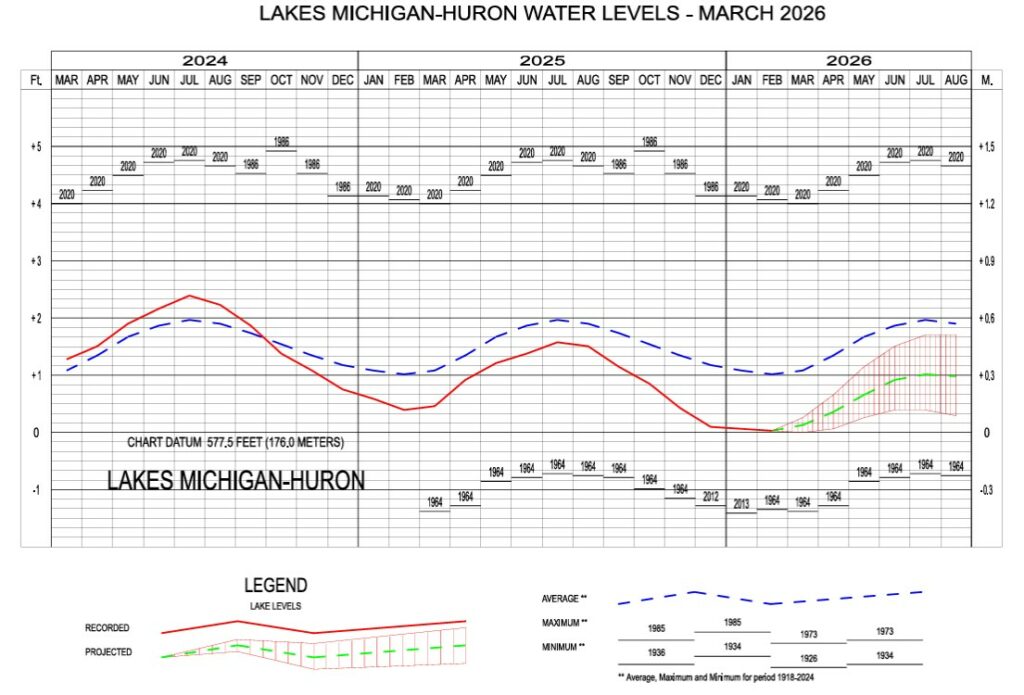
Lake Michigan water levels began their seasonal increase, increasing 5 inches from February to March. Lake Michigan is still about 7 inches below the long-term average water level for March. Water levels are forecast to increase another 4 inches in April.
Water Levels on Lake Michigan-Huron
Here are 5 things to know about water levels on Lake Michigan for March 2026.
What are the current water levels on Lake Michigan?
The water level of Lake Michigan as of March 27, 2026 was at an elevation of 577.92 feet above sea level (from the International Great Lakes Datum). To put this level into perspective, here are some statistics for Lake Michigan relative to the period of water level records measured from 1918 to present (statistics from USACE’s Weekly Water Level Update).
| Compared to… | Current Water Levels are… |
| One month ago | 5 inches higher |
| One year ago | 1 inches lower |
| Long-term March monthly average (1918 to present) | 7 inches lower |
| Record March monthly mean (set in 2020) | 42 inches lower |
What is the outlook for future water levels?
Lake Michigan water levels plateaued in January and February at their seasonal low, before increasing in March. The USACE 6-month forecast of Great Lakes Water levels forecasts that Lake Michigan water levels will continue to increase throughout the spring and into the early summer months. Water levels are forecast to stay below the long-term average (see the water level forecast issued for March 2026 below).
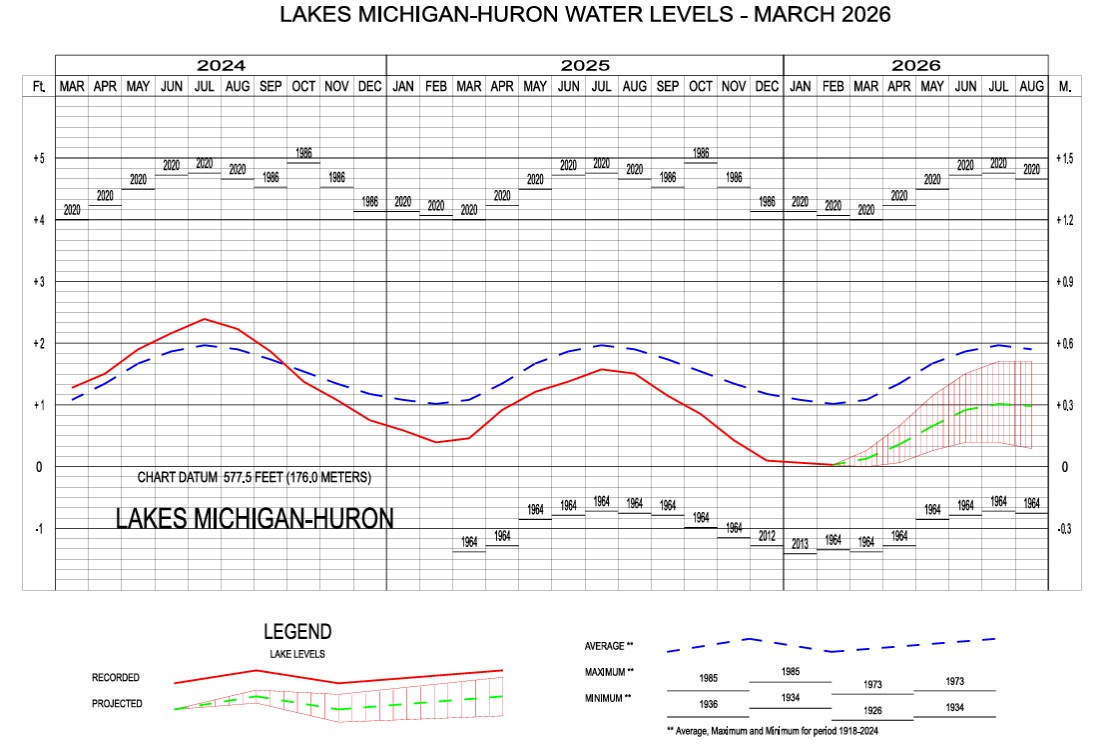
USACE six-month water level forecast for Lake Michigan-Huron retrieved for March 2026 from: https://water.usace.army.mil/office/lre/docs/mboglwl/MBOGLWL-mich_hrn.pdf
What are current and predicted climate conditions like?
According to NOAA’s Climate Prediction Center, a transition from La Niña to ENSO-neutral conditions is expected in the next month, with ENSO-neutral favored through May-July 2026. Across Wisconsin, there are equal chances for above or below normal temperatures in April. Precipitation forecasts for April show a higher chance for above normal precipitation in Wisconsin’s coastal areas (see precipitation outlook map from NOAA Climate.gov below). Check out the NOAA Climate Prediction Center for a full U.S. climate outlook.
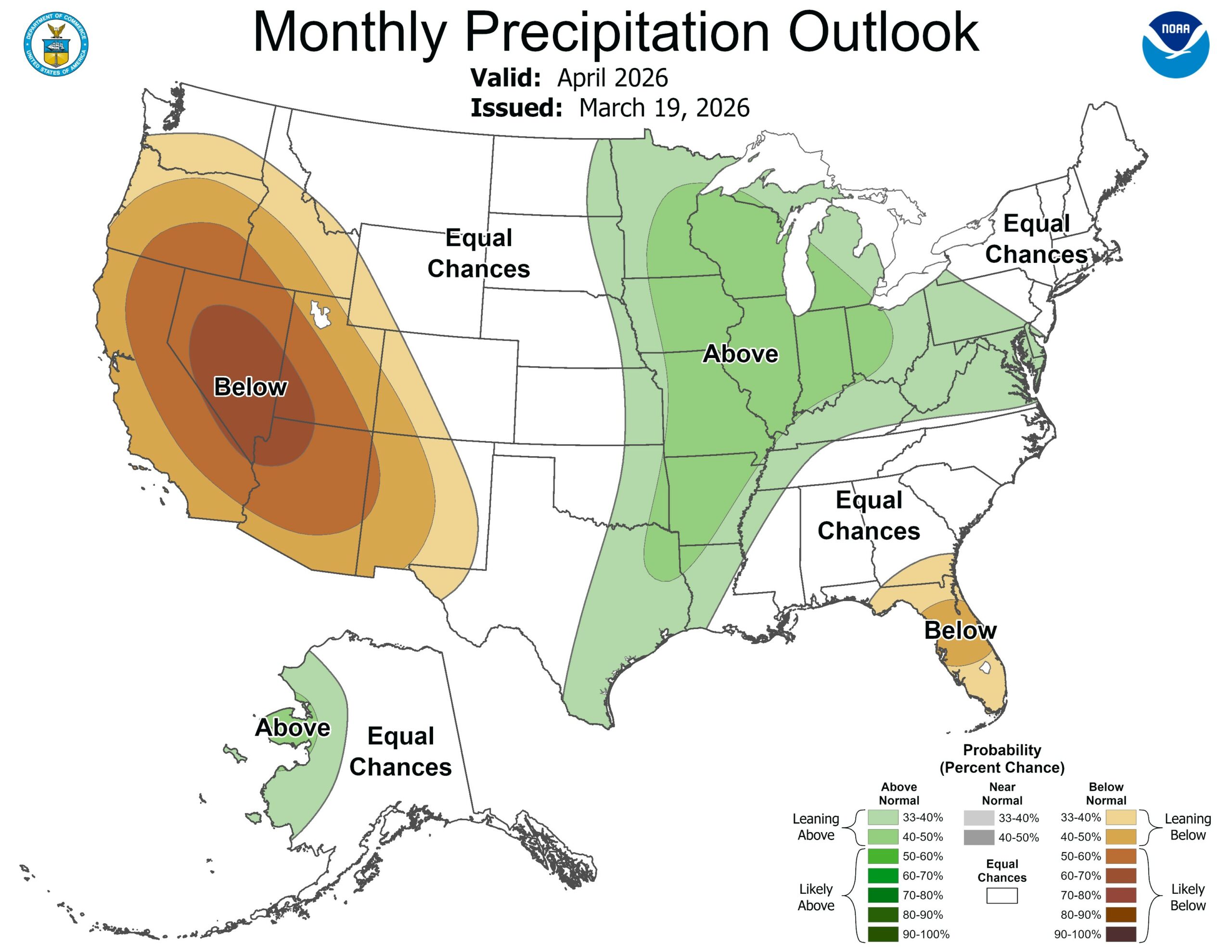
The U.S. precipitation outlook for April 2026. Map by NOAA Climate.gov, based on data from the Climate Prediction Center. From: https://www.cpc.ncep.noaa.gov/
What is behind Great Lakes water level fluctuations?
The story of Great Lakes water level changes is told by Net Basin Supply. Net Basin Supply (NBS) accounts for the water going into a lake in the form of precipitation and runoff minus water leaving a lake due to evaporation of water from the lake surface.
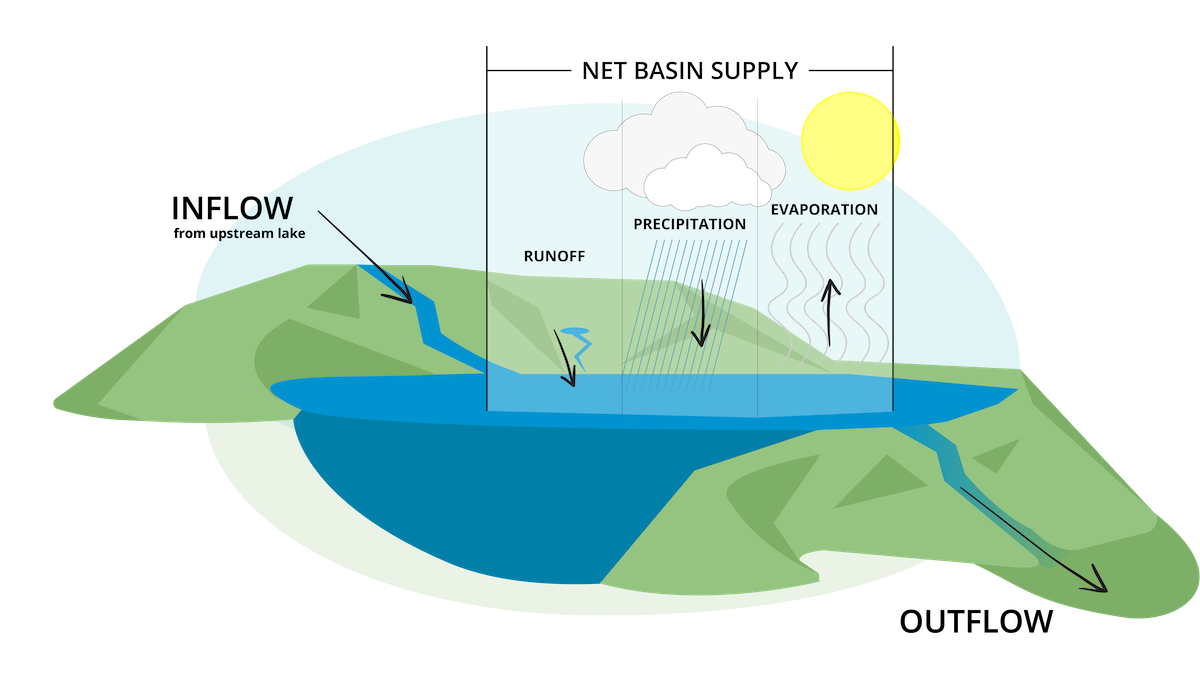
NBS represents the net influence of precipitation over the lake, runoff from a lake’s watershed into the lake, and evaporation from the lake’s surface. Image credit: National Oceanic and Atmospheric Administration
In general, when Net Basin Supply is positive, more water enters the lake than leaves, causing a rise in lake levels. When Net Basin Supply is negative, more water leaves the lake than enters, causing a drop in lake levels.
The annual peak Net Basin Supply occurs when runoff peaks in the spring and experiences its minimum when over-lake evaporation peaks in the winter. These maximums and minimums in Net Basin Supply correspond to the seasonal water level rise and fall.
Evaporation takes place when the Lake’s surface water temperature is warmer than the air temperature. Evaporation increases in the fall and winter as the difference between air temperature and water temperature increases. In February, Lake Michigan water supplies were above average and water outflows were slightly below average.
What is making water levels go down?
Since monthly record highs in 2020, the Great Lakes water levels have been trending downwards. This trend has continued and water levels are lower than they were at the same time in 2025. In October 2024, Lake Michigan’s monthly mean water level dropped below average for the first time in 10 years and has remained below average since. Water levels are expected to remain below average for the next six months. The graph below visualizes the monthly NBS in recent years compared to the monthly mean, maximum, and minimum for each lake basin. Red diamonds represent below average NBS, whereas blue diamonds represent above average NBS.
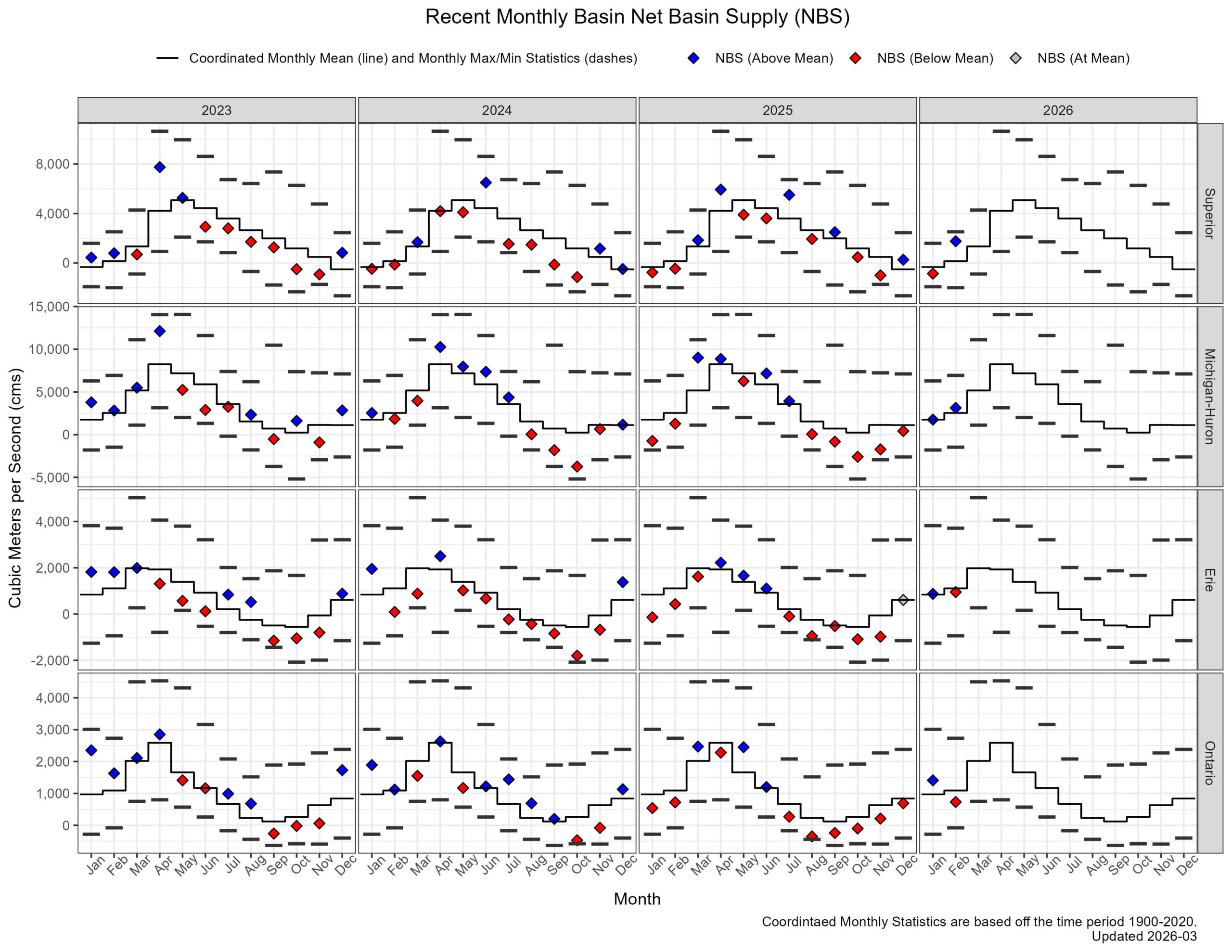
Monthly NBS in recent years compared to the monthly mean, maximum, and minimum for each lake basin. Retrieved from: https://water.usace.army.mil/office/lre/basinconditions/basinConditions
Water level fluctuation is a process that occurs annually due to changes in net basin supply. For Lake Michigan, January and February had above average net basin supply, contributing to the seasonal water level increase.
More Resources & Relevant Information:
- In this Adapting to A Changing Coast PBS Special, Dr. Adam Bechle explains how fluctuations in rainfall, runoff, and evaporation cause the Great Lakes’ water levels and coastlines to vary.
- NOAA’s Climate.gov site hosts climate data and information to help you understand climate processes and make decisions on how to manage climate-related risks and opportunities.
- U.S. Climate outlook for April 2026
- Great Lakes Chapter of the Climate Resilience Toolkit
- Our Coastal Hazards page for details about the impacts of high water levels, including erosion, flooding, and navigation issues.
- Our Policy, Planning, and Risk Reduction Strategies page has tools and resources to help local governments identify local resilience opportunities.